COB Holographic Transparent LED Screen vs. Traditional: The Ultimate 2026 Tech Comparison
As visual technology evolves, the debate between COB holographic transparent LED screens and traditional SMD-based transparent displays has taken center stage in the pro-AV market. For architects, retail designers, and event planners, choosing the right transparent display can mean the difference between a "washout" image and a breathtaking 3D holographic experience.
In this guide, we dive deep into the technical specifications, cost factors, and performance benchmarks of both technologies to help you make an informed decision for your next high-impact project.
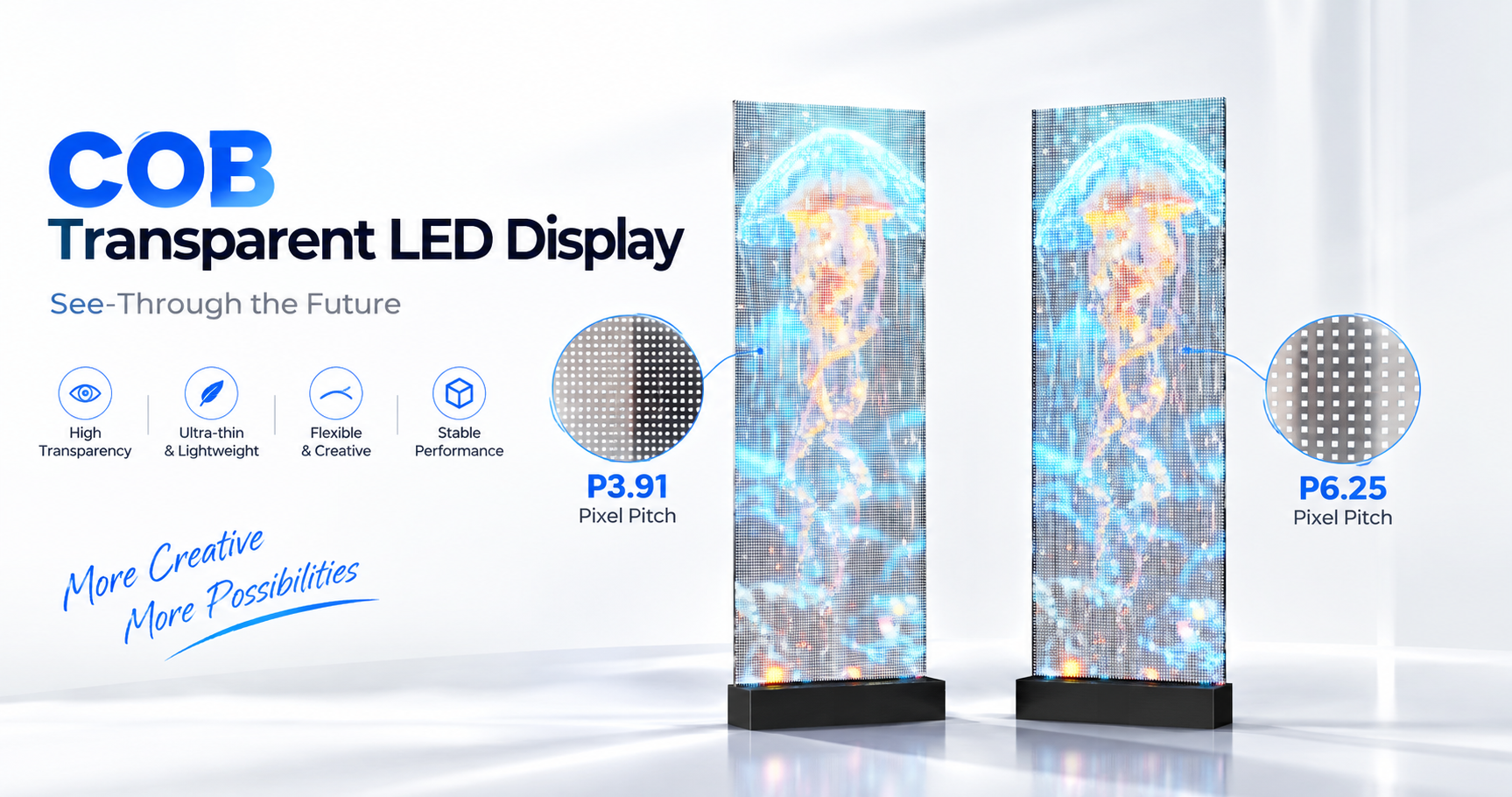
Direct Answer: What is the Main Difference?
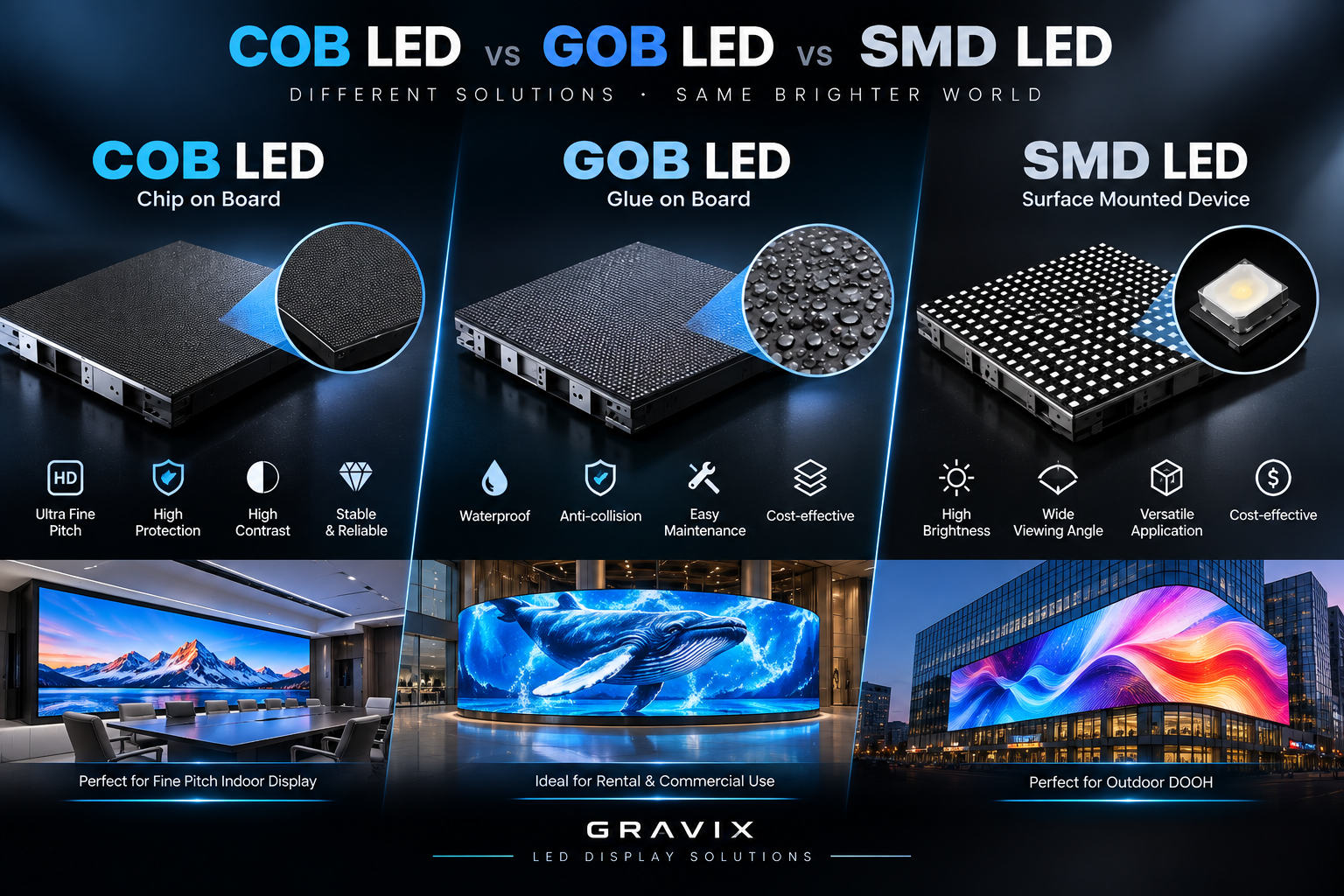
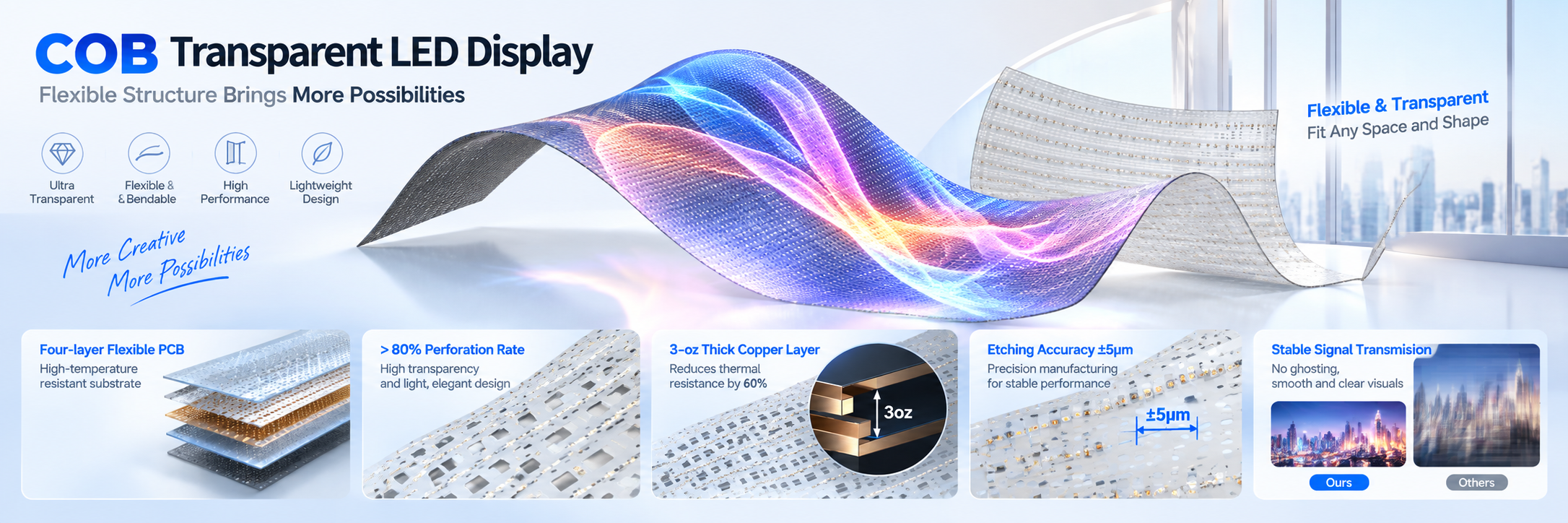
The primary difference lies in the packaging technology. Traditional transparent screens use Surface Mounted Device (SMD) LEDs, where individual chips are soldered onto the PCB. In contrast, COB (Chip-on-Board) technology mounts the LED chips directly onto the board and covers them with a transparent resin. This results in higher pixel density (fine pitch), superior protection (IP65/waterproof), and a more seamless "holographic" transparency compared to SMD.
COB vs. Traditional: Technical Performance Breakdown
| Feature | COB Holographic Transparent Screen | Traditional SMD Transparent Screen |
|---|---|---|
| Pixel Pitch | Ultra-fine P3.91/P6.25) | Standard (P2.6 - P10) |
| Durability | High (Encapsulated) | Moderate (Exposed LEDs) |
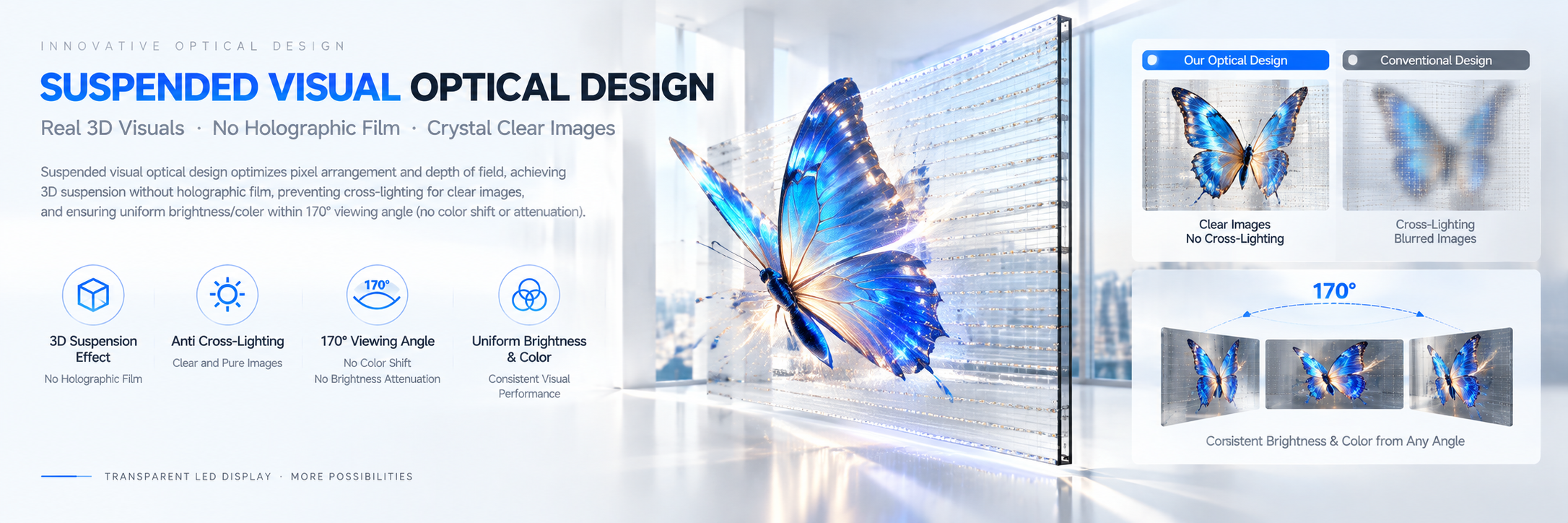
| Viewing Angle | 160° - 170° (Wider) | 120° - 140° |
| Transparency | High (Clearer Optics) | High (Grid patterns visible) |
| Maintenance | Low (Dust-proof/Anti-static) | Higher (Risk of LED knock-off) |
1. Superior Optical Clarity and Transparency
Traditional screens often suffer from visible "mesh" patterns at close range. Because COB LED technology allows for smaller chip placement and a smoother surface, the holographic effect is significantly more immersive. The light passage is optimized, making the screen appear almost invisible when the pixels are black, which is the cornerstone of 3D holographic content.
2. Durability and All-Weather Performance
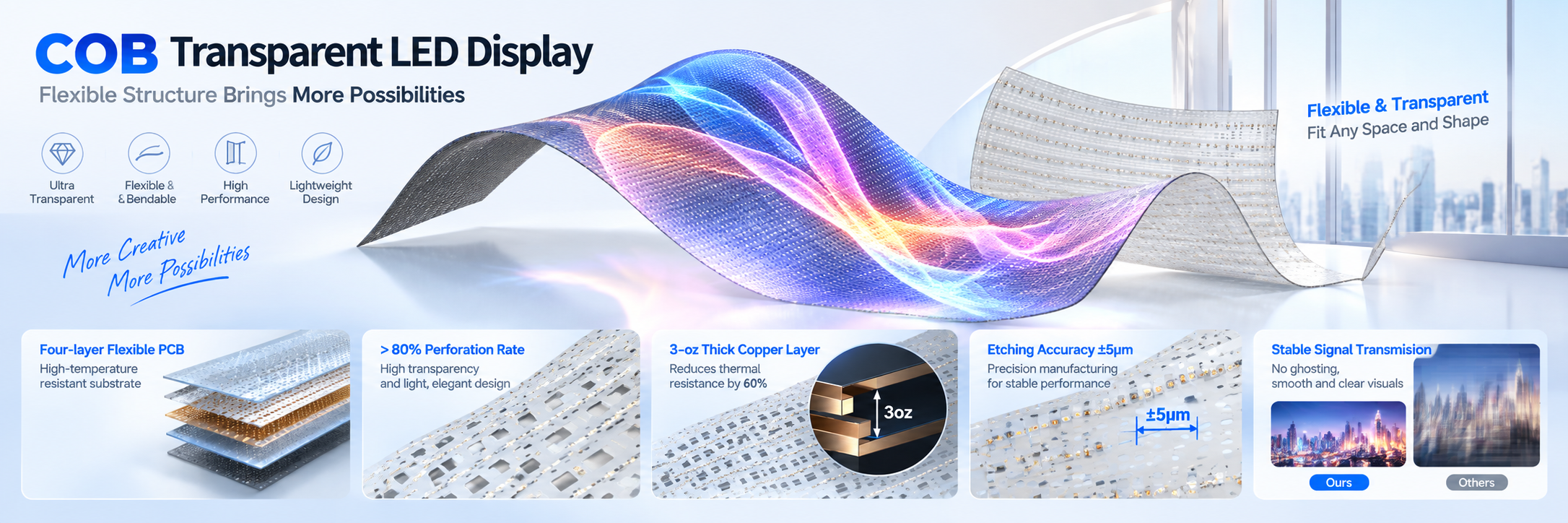
One of the major pain points of traditional SMD screens is "dead pixels" caused by physical contact or moisture. COB technology solves this by encapsulating the entire surface. This makes the COB holographic transparent LED screen resistant to moisture, dust, and minor impacts—ideal for high-traffic retail storefronts and public exhibitions.
Cost Analysis: Transparent Holographic Screen Price Factors
When researching transparent holographic screen prices, it is clear that COB technology carries a 20-30% premium over traditional SMD models. However, the total cost of ownership (TCO) is often lower due to:
- Reduced Maintenance: Fewer individual LED repairs are needed.
- Longevity: Encapsulation prevents oxidization and thermal damage.
- Value Impact: Higher brightness and better contrast drive better engagement in commercial settings.
Strategic Applications: Where to Use COB Technology
While traditional screens are excellent for large-scale outdoor advertising or massive building facades, COB holographic displays excel in:
- Luxury Retail Storefronts: Where P1.9 or finer resolution is required for luxury branding.
- Corporate Command Centers: Where transparency and high-resolution data visualization must coexist.
- Museums and Interactive Exhibits: Where visitors stand close to the display.
FAQ
Q: Can I use COB transparent screens outdoors?
A: Yes, many COB models come with IP65-rated encapsulation, making them more suitable for outdoor or semi-outdoor environments than traditional SMD screens.
Q: Is the transparency rate lower on COB screens?
A: Not necessarily. While the pixel density is higher, the smaller size of the LED chips often allows COB screens to maintain a 70-85% transparency rate.